"We Shrink the Search Space"
Gondor builds quantum-inspired search-space reduction engines that collapse computationally infeasible problem domains into tractable solutions — transforming months of brute-force computation into seconds of precision.
Protein folding, drug interaction mapping, genomic search
Signal intelligence, threat detection, cryptographic analysis
Key-space reduction, entropy analysis, cipher validation
Fraud detection, risk modeling, anomaly identification
Supply chain, logistics, combinatorial scheduling
Model pruning, inference acceleration, data deduplication
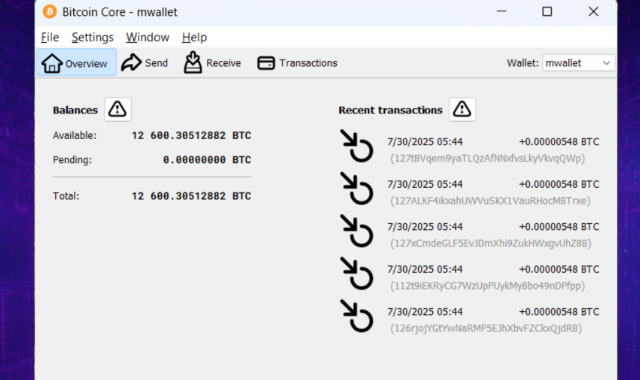
You’re locked out of this wallet.
What do you do?
The world's most critical computational problems exist in search spaces so vast that no amount of hardware can solve them by exhaustive enumeration.
Typical cryptographic search spaces exceed the number of atoms in the observable universe
Nearly all GPU cycles in brute-force approaches evaluate candidates that could have been mathematically eliminated
Even state-of-the-art GPU clusters cannot meaningfully dent these search spaces within operational timeframes
Organizations spend millions on compute infrastructure with no guarantee of finding solutions
Continuous-variable quantum-inspired signal decomposition for structural pattern extraction
QUMODE CV-QNNSequential probability ratio testing for provable elimination of infeasible search regions
SPRT/Wald ShannonBayesian candidate ranking with adaptive confidence thresholds and real-time recalibration
Bayesian MCMCDirected acyclic graph orchestration enabling iterative refinement with convergence guarantees
DAG FeedbackHand-optimized sm_90 GPU kernels for GB200 NVL72, maximizing throughput on NVIDIA's latest architecture
GB200 sm_90 NVL72Ballistics → Spike Maps → Domain Pruning → Full Verify. Each phase eliminates orders of magnitude from the search space before the next begins.
Sealed CV qumode oracle returns only entropy_bits — no raw candidates leak. Gaussian/Fock backends guide pruning with quantum-inspired signal decomposition.
Wald Sequential Probability Ratio Test drives every tile decision: Accept, Reject, or Continue. FDR ledger provides SHA256-chained cryptographic audit trail.
| Capability | Gondor | Brute Force | Heuristic |
|---|---|---|---|
| Quantum-guided pruning | ✓ | ✗ | ✗ |
| 1075× search reduction | ✓ | ✗ | ✗ |
| Password length detection | ✓ | ✗ | ✗ |
| SPRT accept/reject/continue | ✓ | ✗ | ✗ |
| 72-GPU custom CUDA kernels | ✓ | ✗ | ✗ |
| Cryptographic audit trail | ✓ | ✗ | ✗ |
$250K retainer to engage. 50/50 split on recovered assets. Retainer reimbursed on successful recovery.
$250K retainer to begin. Half of all recovered value. Retainer reimbursed upon successful wallet opening. One whale wallet = one year of operations.
IDIQ contracts, OTA agreements, and SBIR programs for seized crypto access and national security cryptanalysis.
Pay-per-reduction cloud API metered by compute-seconds. 905M effective ops/sec on GB200 cluster.
15+ years cybersecurity & engineering. Founder of DomainTools (acquired). Serial entrepreneur in security infrastructure.
Post-quantum cryptography, blockchain security, and GPU kernel engineering. Architect of the Spider Engine and CUDA pipeline.
Founder of MobileCoin — the privacy-first cryptocurrency integrated into Signal Messenger.
Founder of Hyperdrive (top DeFi on Hyperliquid). Managing Partner, Three Sigma Capital. Ex-Microsoft Director.
"We Shrink the Search Space"
The world's hardest problems aren't waiting for faster GPUs.
They're waiting for smarter search.